
Case Study: Improving Comfort and Reducing Energy Use in a 1930s Detached Home
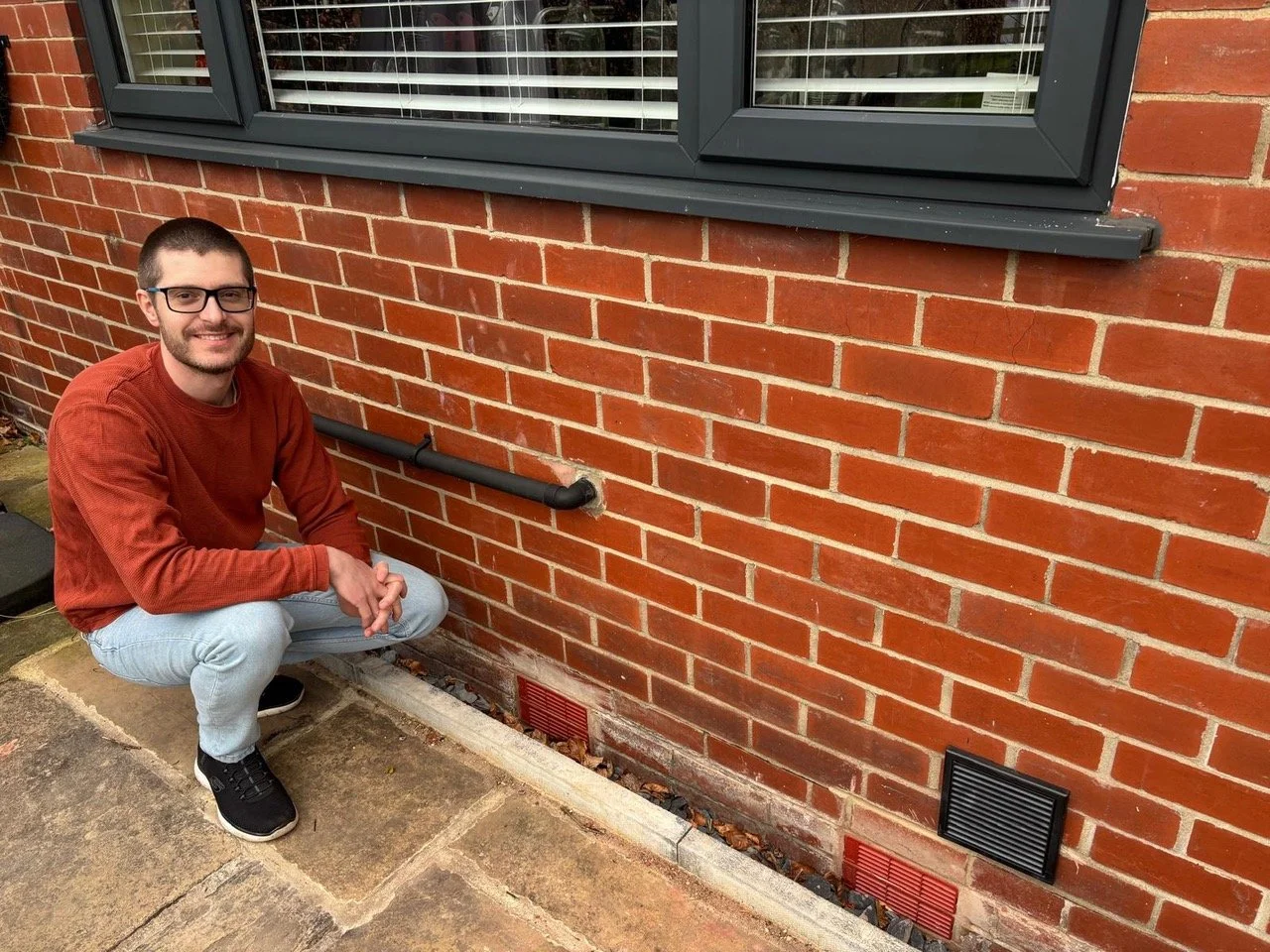
Floorvent delivering a warmer, more comfortable home
A practical retrofit solution for a complex property
For many homeowners, improving energy efficiency is not straightforward. Older homes often come with constraints that make traditional retrofit measures difficult, disruptive, or prohibitively expensive. This case study highlights how one homeowner in West Yorkshire found a practical way to improve comfort and reduce energy use, without major disruption, using AirEx Floorvent.
The property
The five-bedroom detached home was built in the 1930s and has been extensively modified over the years. While these changes added character, they also introduced complexity, making it challenging to take a straightforward approach to retrofit.
The homeowner approached the project with a clear goal: to make the home warmer, more comfortable, and less environmentally impactful.
Since moving in during 2020, he had already made several improvements. These included installing a heat pump, adding a 2kW solar array, upgrading loft insulation, and converting the garage to a high insulation standard. However, despite these upgrades, key challenges remained, particularly around the floors and walls.
The challenge
Like many homes of this age, the property has suspended timber floors ventilated by air bricks. While essential for preventing moisture build-up, these air bricks also allow continuous cold air to flow beneath the floor.
This issue became particularly noticeable after discovering that several air bricks at the rear of the house had been blocked. Once reopened to restore proper ventilation, the unintended consequence was a colder kitchen.
At the same time, the home’s engineered wood flooring had been installed without insulation, resulting in consistently cold floors and the kitchen struggled to reach comfortable temperatures in winter.
Energy costs were also a growing concern. As a fully electric home with a heat pump and electric vehicle, the household’s electricity use was already significant. Following the war in the Ukraine, rising energy prices shifted the focus from sustainability alone to include affordability.
The homeowner needed a solution that could balance underfloor ventilation and heat retention, without introducing new risks or major disruption.
Finding the right solution
After researching various underfloor insulation options, several were ruled out. Spray foam insulation, while effective in some cases, was considered too expensive and carried concerns around material performance and long-term implications for property value.
A more hands-on approach, installing natural wool insulation beneath the floor, was also explored. However, limited crawl space made this impractical.
AirEx Floorvent emerged as a viable alternative. Rather than blocking airflow entirely, it offered a way to control ventilation more intelligently, reducing unnecessary heat loss while maintaining adequate airflow under the floor.
The decision to proceed was also influenced by confidence in the installer. The homeowner connected with Wrapt, a retrofit specialist, after attending a local event. Their holistic approach, focusing on how different measures work together rather than in isolation, aligned closely with the homeowner’s own thinking.
Installation
Five AirEx Floorvent units were installed.
The process was straightforward. Existing air bricks were carefully removed and replaced with the new units, with attention paid to preserving the property’s original brickwork. The installation was completed with minimal disruption.
The results
The most immediate impact was an improvement in comfort.
Floors, particularly in the kitchen, became noticeably warmer underfoot. Previously, the space struggled to exceed 19°C in winter. Following installation, temperatures consistently rose above 20°C. While this may seem like a small change, combined with reduced draughts it made a significant difference to how the space feels.
In terms of energy performance, the results were also clear. At an outdoor temperature of 6°C, daily heating demand through the heat pump reduced from 35 kWh to 30 kWh. This represents a 14.2% reduction in energy use.
This improvement also enabled the homeowner to lower the heat curve on their heat pump, allowing it to run at lower temperatures and operate more efficiently.
While monthly energy bills vary due to a time-of-use tariff, the reduction in overall energy consumption indicates a clear long-term benefit.
A complementary solution
One of the key advantages of AirEx Floorvent in this case was how well it worked alongside existing measures.
With a heat pump already installed, reducing heat loss from the building fabric becomes even more important. By improving the performance of the floor, AirEx helped the heating system operate more efficiently, supporting better overall system performance.
It also provided a solution where traditional insulation was not feasible, avoiding the disruption and complexity that would have come with more invasive options.
Homeowner reflections
For this homeowner, AirEx Floorvent offered a practical balance.
It was not expected to deliver the same results as full underfloor insulation, but it provided a meaningful improvement with minimal disruption. The combination of comfort gains, energy savings, and ease of installation made it a worthwhile investment.
There is also a forward-looking benefit. As awareness of energy efficiency grows, technologies like AirEx are likely to become more attractive to future buyers, helping to differentiate and add value to the property.
Advice for other homeowners and installers
For homeowners, the key takeaway is that not every improvement needs to be complex or disruptive to be effective. Where traditional insulation is not viable, solutions like AirEx Floorvent provide a low-effort way to improve comfort and reduce energy use.
For installers, this highlights an opportunity to offer more complete retrofit solutions. By addressing underfloor heat loss, a commonly overlooked issue, it is possible to add value to projects, improve outcomes for clients, and strengthen your overall offer.
A simple step, delivering real impact
This project demonstrates that even in complex properties, there are practical ways to make meaningful improvements. By taking a joined-up approach and selecting the right solutions, it is possible to deliver warmer, more comfortable homes with lower energy use, without adding unnecessary complexity.
