
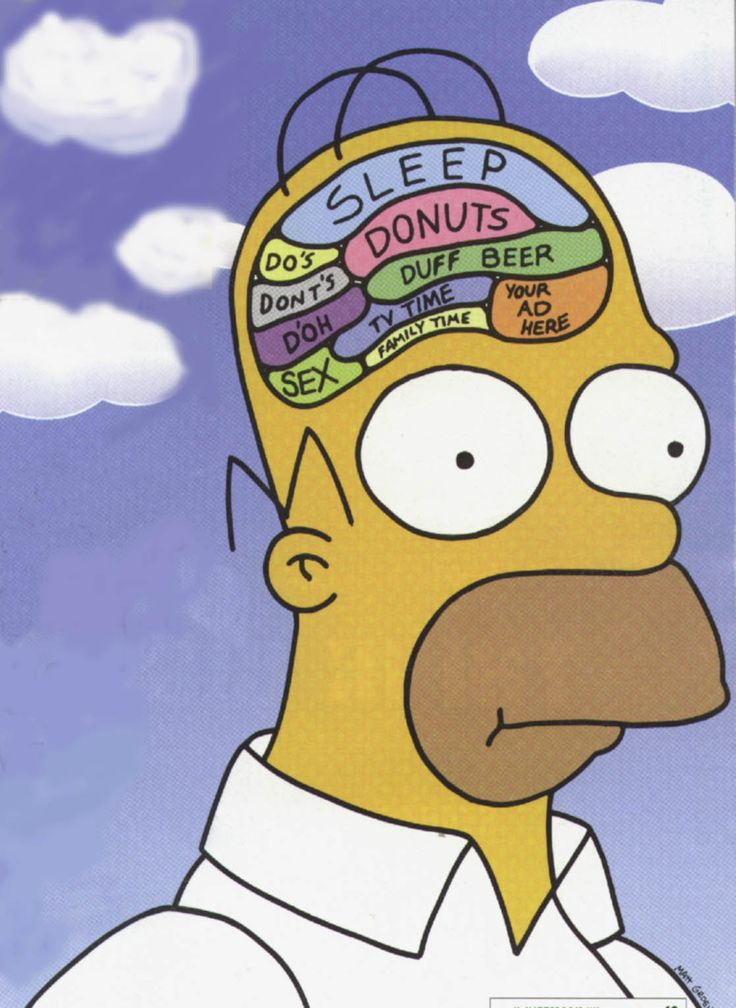
Homer Economicus
A couple of weeks ago Guy Martin’s ‘House With No Bills’ caused a minor stir in retrofit-land, with lots of excited geekery. But as Ele George noticed, it didn’t go down so well in the “real world” of the Gogglebox gang. Do read her post, the comments on the show were less than complimentary.
As she pointed out, the response from viewers was not fascination with the technology or the ambition, it was more along the lines of, “All this to save a couple of quid.” This reminded me of a period in my former life when I was working with esteemed transport researcher and self-confessed metal-head Prof Glenn Lyons, who at the time was doing really interesting work on transport users’ interaction with technology.
We have this idea that people make rational decisions based on information from credible sources, and that if we give people the right information, they will do the right thing. But Glenn pointed out that most people are less this rational ‘homo economicus’ and more like “Homer Economicus” with a head full of other things; beer, donuts, sleep to name a few.
The discussion in transport was how people adopt technology to help journeys. There is lots of data and routing information to help us make the best possible choices. But in reality we tend to find something that basically works for us and stick to it, even if it isn’t perfectly optimised. Glenn described this as "satisficing" behaviour. It’s good enough so why change it?
So rather than optimising, people “satisfice.” They find something that works well enough, with minimal effort, and they stick with it. That idea has stayed with me, because it explains a lot about what we are seeing in retrofit today.
There is a clear gap between how we, as a sector, think about homes, and how residents experience them. You might call it the ‘Gogglebox Gap’. We focus on performance, optimisation and technical detail. Residents focus on getting through the day comfortably, without too much hassle, focussing on the things that are important to them.
They do care about warmth, about bills, about health, but they do not want to think about the technical details. They do not want disruption. And they certainly do not want complexity. If a solution requires too much effort, too much understanding or too much change to daily life, it simply will not land, no matter how good it is on paper.
That is why approaches that prioritise simplicity and low disruption matter.
Take what Heat Geek are doing with their ‘Zero Disrupt’ heat pump installation. It is grounded in strong engineering and data, but the focus is on minimising impact on the household and talking with a simple, credible voice. There may be some trade offs in CoP, but the outcome is something that works, and crucially, something people will accept.
We take a similar view with Floorvent, the aim is not to create a perfect system on paper. It is to deliver a meaningful improvement in how a home performs, in a way that is simple to install and easy to live with. Fit it and it just does its job. It reduces heat loss, it helps manage moisture risk, and it does so without asking anything of the resident.
The same thinking applies as we look at ventilation more broadly. People do not want to manage their ventilation, it is not something they are thinking about on a day to day basis. The home needs to do that for them, quietly and reliably in the background.
The lesson for all of us in retrofit is quite clear. We can continue to educate, inform and provide better data and all of that matters, but it is not enough on its own. If we want retrofit to work at scale, we have to start with people as they are, not as we would like them to be. That means designing solutions that fit into real lives, not ideal ones.
If we do not close that gap, we risk our technology becoming irrelevant, not because the solutions are wrong, but because they are not usable in the real world. Which is more akin to Gogglebox or Springfield than we like to think.
